Five fights. Three victories. Two defeats.
That is how Lawson Gordon Thain’s professional boxing career might appear in a record book.
It tells us nothing of the district championships he won in Scotland. Nothing of the boxing knowledge he carried into National Service. And nothing of the reported connection between the Aberdeen fighter and a young Henry Cooper.
For those details, we have to look beyond the numbers.
And when we do, a rather different story begins to emerge.
From Aberdeen’s Amateur Boxing Ranks
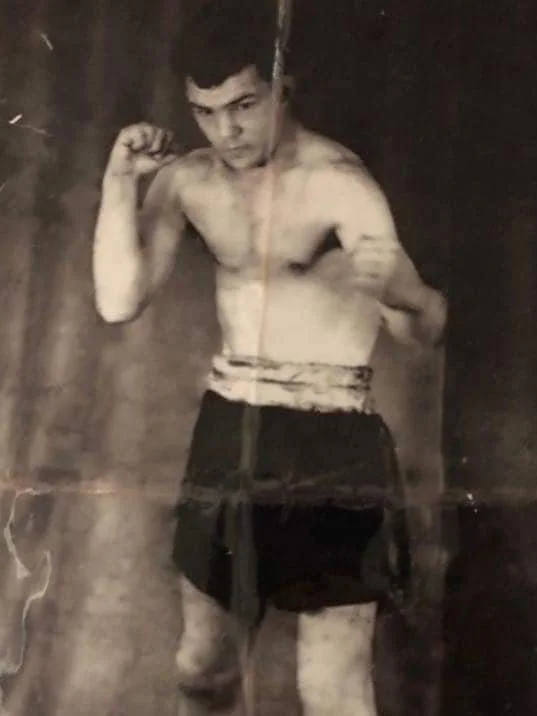
Aberdeen possessed a well-established amateur boxing culture during the middle decades of the twentieth century.
A family-held newspaper clipping says Lawson began boxing aged twelve in 1946 at Tommy Begg’s club in Aberdeen’s Shiprow Tavern. His daughter recalls boxing becoming particularly important after the death of his mother shortly before his fourteenth birthday. These accounts need not conflict: beginning a sport and finding refuge in it can be different moments in a young life.
Aberdeen Boxing Club’s historical championship roll independently records three junior district honours in Lawson’s name: one North East District championship and two Midland District championships. The roll does not give his title years or weight divisions. Nor should the honours be described as Scottish national titles: these were district championships, earned in the ring.
For young men entering the sport, local clubs and district championships offered an opportunity to develop their abilities, compete against experienced opponents and earn recognition beyond their own gymnasiums.
Thain was more than an enthusiastic participant.
Amateur boxing in this period was demanding. Fighters progressed through organised competitions, frequently travelling between towns and cities to face opponents whose reputations had been built in equally competitive club environments.
District titles were not awarded for promise alone. They had to be won in the ring.
Thain’s achievements demonstrate that, before he ever appeared on a professional bill, he had already established himself as a capable and successful boxer.
His amateur background would become particularly relevant when his story moved beyond Scotland.
Lawson Thain, in an early boxing portrait, believed by his daughter to date from around 1948. Courtesy of Donna-Dora Ewen and the Thain family.
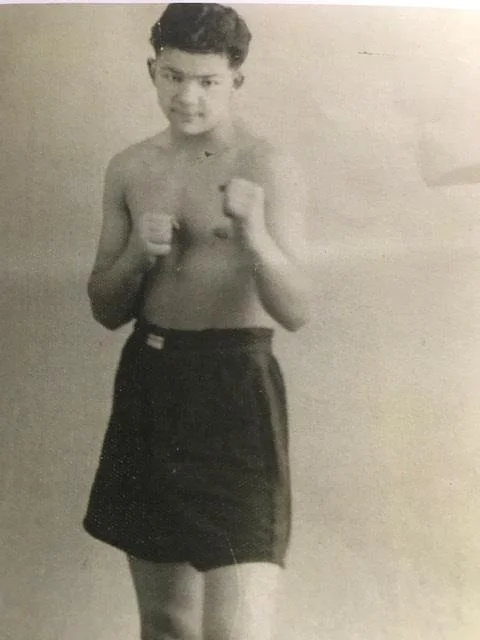
For many years, the readily available professional records of Lawson Thain presented an incomplete picture.
Some sources listed only three contests. Others identified four.
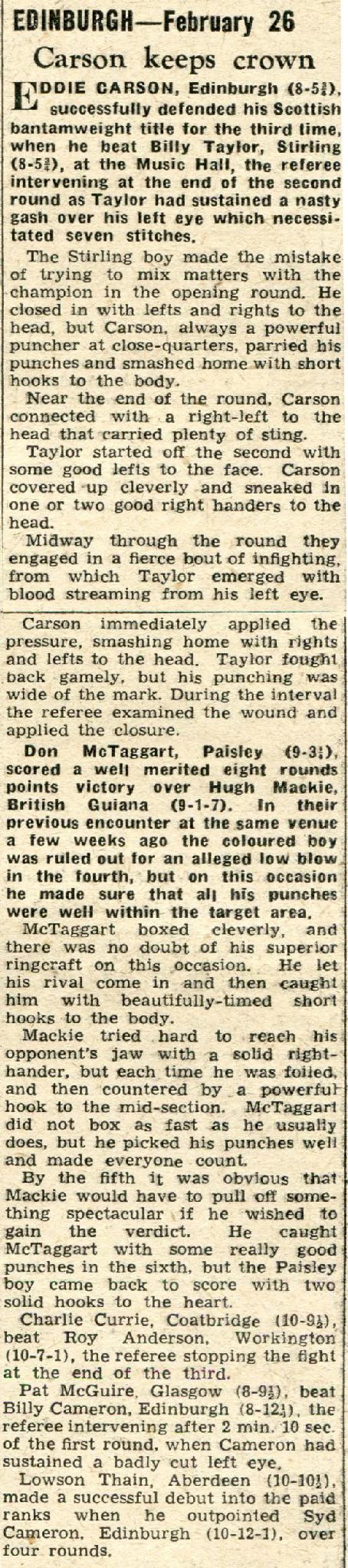
Research undertaken by boxing historians Miles Templeton and Richard Ireland, using contemporary boxing and newspaper material, has established a fifth contest and reconstructed Thain’s professional career as five fights: three victories and two defeats.
The missing contest was particularly important because it appears to have been Thain’s professional debut.
On 26 February 1952, he faced Syd Cameron and won a four-round points decision.
It was the beginning of a short but busy period in which Thain fought five times over little more than four months.
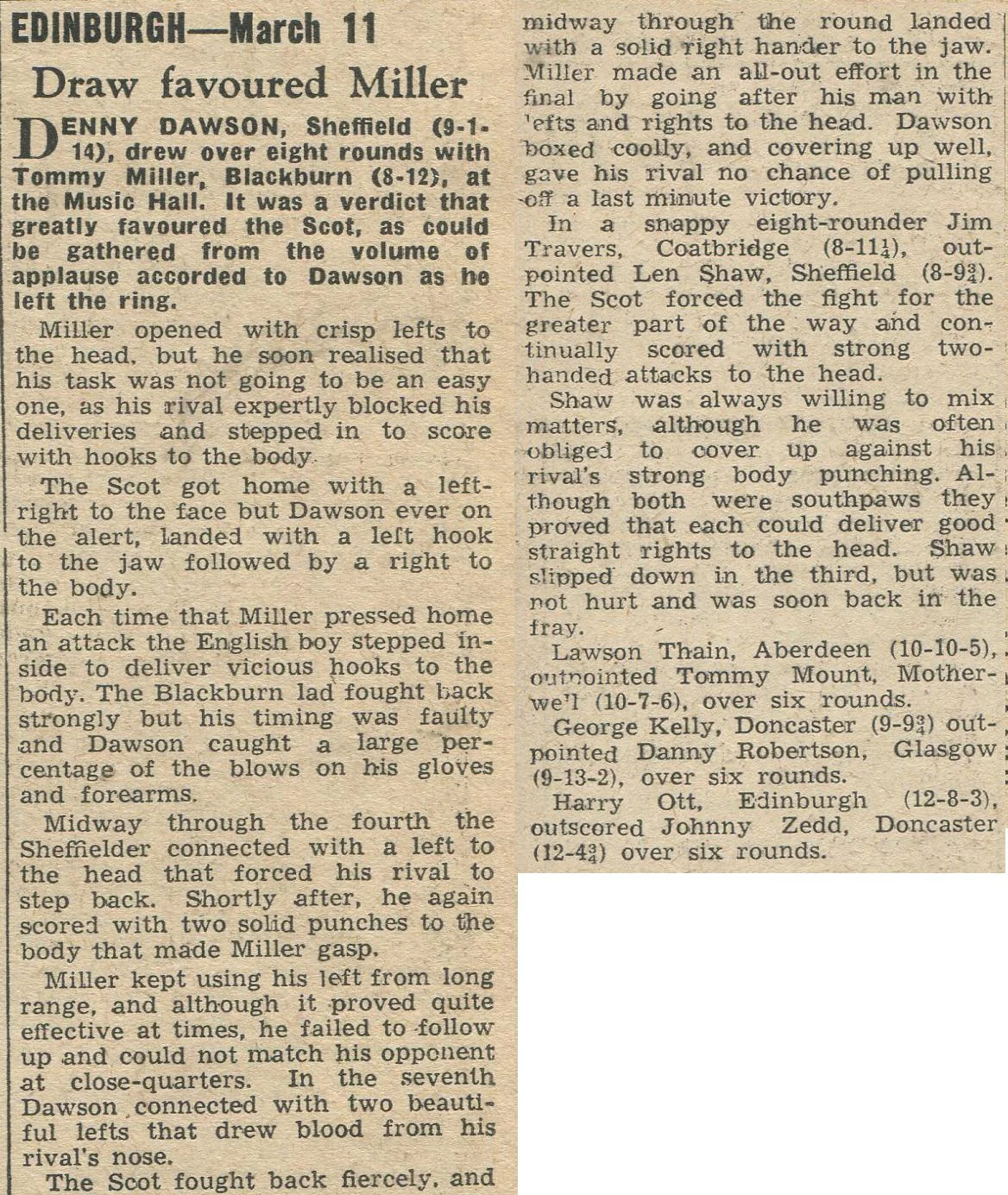
His next appearance came on 11 March against Tommy Mount at Edinburgh’s Waverley Market.
Thain again won on points, this time over six rounds.
Two weeks later, on 25 March, he returned to Edinburgh to face Paddy Gordon at the Music Hall.
This contest produced the only knockout victory in his reconstructed professional record, with Thain stopping Gordon in the fifth round.
Three fights, three victories.
It was a promising beginning.
The following month, however, Thain suffered his first recorded professional defeat, losing on points to Peter Cain at Dundee’s Caird Hall on 23 April.
His fifth and final identified contest took place on 1 July 1952 against Jack Thornbury at The Arena in Mile End, London.
Thain again lost on points.
The surviving record therefore describes a boxer who began his professional career with three successive victories before suffering two defeats.
There is no need to embellish those results. They speak for themselves.
Thain had stepped into the professional game, travelled to compete and experienced both the satisfaction of victory and the disappointment of defeat.
His documented career was brief, but it was a genuine professional career, built upon the amateur achievements that had preceded it.
Lawson Thain — Reconstructed Professional Record
| Date | Opponent | Result |
|---|---|---|
| 26 February 1952 | Syd Cameron | Won on points, 4 rounds |
| 11 March 1952 | Tommy Mount | Won on points, 6 rounds |
| 25 March 1952 | Paddy Gordon | Won by knockout, round 5 |
| 23 April 1952 | Peter Cain | Lost on points |
| 1 July 1952 | Jack Thornbury | Lost on points |
Total: 5 fights — 3 wins, 2 defeats, 1 knockout victory.
Record reconstructed through research supplied by boxing historians Miles Templeton and Richard Ireland, including identification of the previously omitted Syd Cameron contest.
Their findings also place Thain among the welterweights, rather than the light-heavyweights suggested by some later biographical material.
Five fights instead of four. Three victories instead of two.
The difference is a single contest against Syd Cameron on 26 February 1952.
It might seem a small correction. But it is the difference between an incomplete record and a more accurate account of a man’s professional career.
That is why the research matters.
National Service and the Boxers’ Battalion
The early 1950s were years in which the demands of National Service shaped the lives of countless young British men.
Boxers were no exception.
For some, military service interrupted promising sporting careers. For others, it provided access to training facilities, experienced coaches and a standard of competition that might otherwise have been difficult to obtain.
The British Army maintained a strong tradition of competitive boxing, with individual championships, inter-unit contests and competitions between the armed services.
Among its best-known establishments was the 4th Battalion of the Royal Army Ordnance Corps, associated with Blackdown and Deepcut in Surrey.
The battalion became known as the Boxers’ Battalion.
Its boxing programme was run by Captain Eastlake, who recognised the value of bringing talented amateur fighters together.
Among the men who entered this environment were Henry Cooper and his identical twin brother George, later known professionally as Jim Cooper.
Henry had represented Great Britain at the 1952 Helsinki Olympic Games. He was already a successful amateur, with national honours to his name.
His arrival in the Army did not mark the beginning of his boxing education. Rather, it introduced him to a different environment in which that education could continue.
In an account published by the Ministry of Defence on 3 May 2011, Cooper recalled his National Service and the opportunities provided by the battalion.
The brothers undertook basic training at Blackdown before becoming part of the Army boxing programme.
Cooper remembered that the boxers received time to train, additional rations and occasional lie-ins, privileges intended to help them prepare for competition.
The arrangement was unusual, but its purpose was straightforward.
The Army wanted successful boxing teams.
To achieve that, it brought capable fighters together and gave them the opportunity to develop within a concentrated training environment.
The Henry Cooper Connection
Donna-Dora Ewen recalls that her father trained and sparred with both Henry and George Cooper in the Army boxing environment. She explains that his professional status prevented him from representing the Army as an amateur competitor, so he helped prepare the team. Donna-Dora remembers him discussing the uppercut and the advantages of southpaw boxing, but cannot say that he taught either brother a particular punch or technique. Her account is valuable direct family testimony; the exact dates, frequency and formal designation of his Army work remain unverified.
Contemporary newspaper reports and rankings from the research collections supplied by Miles Templeton and Richard Ireland.
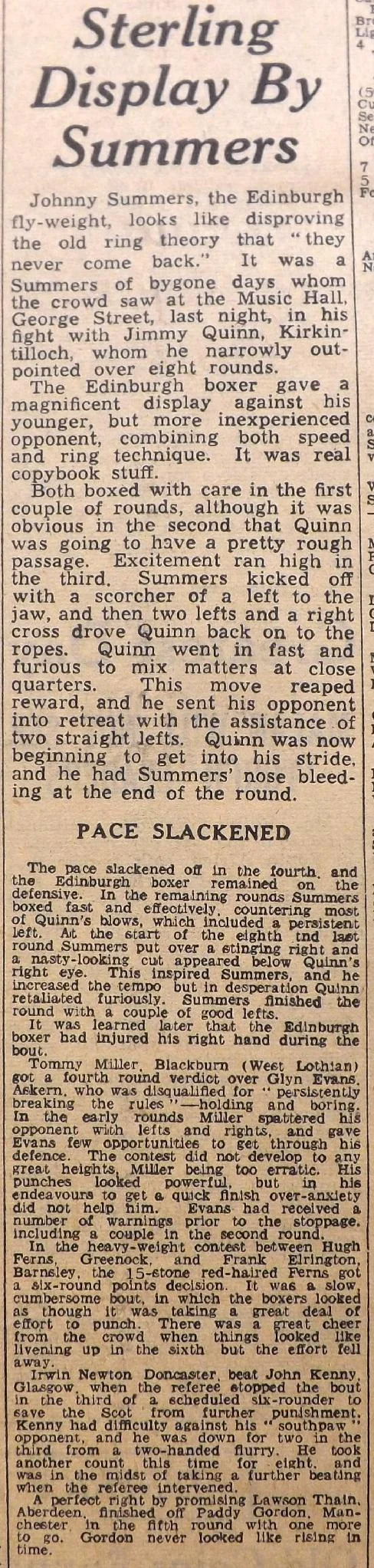
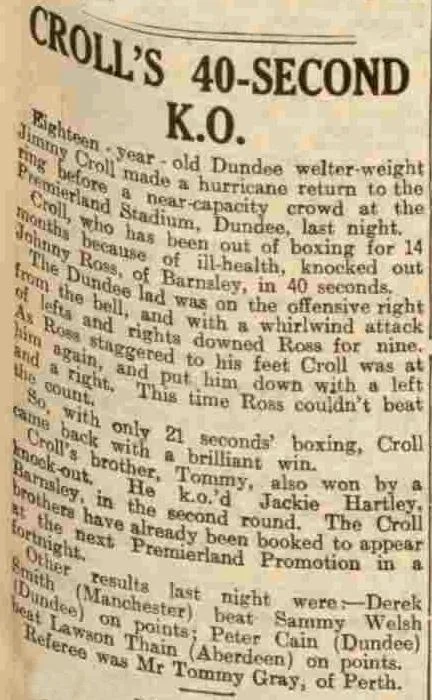
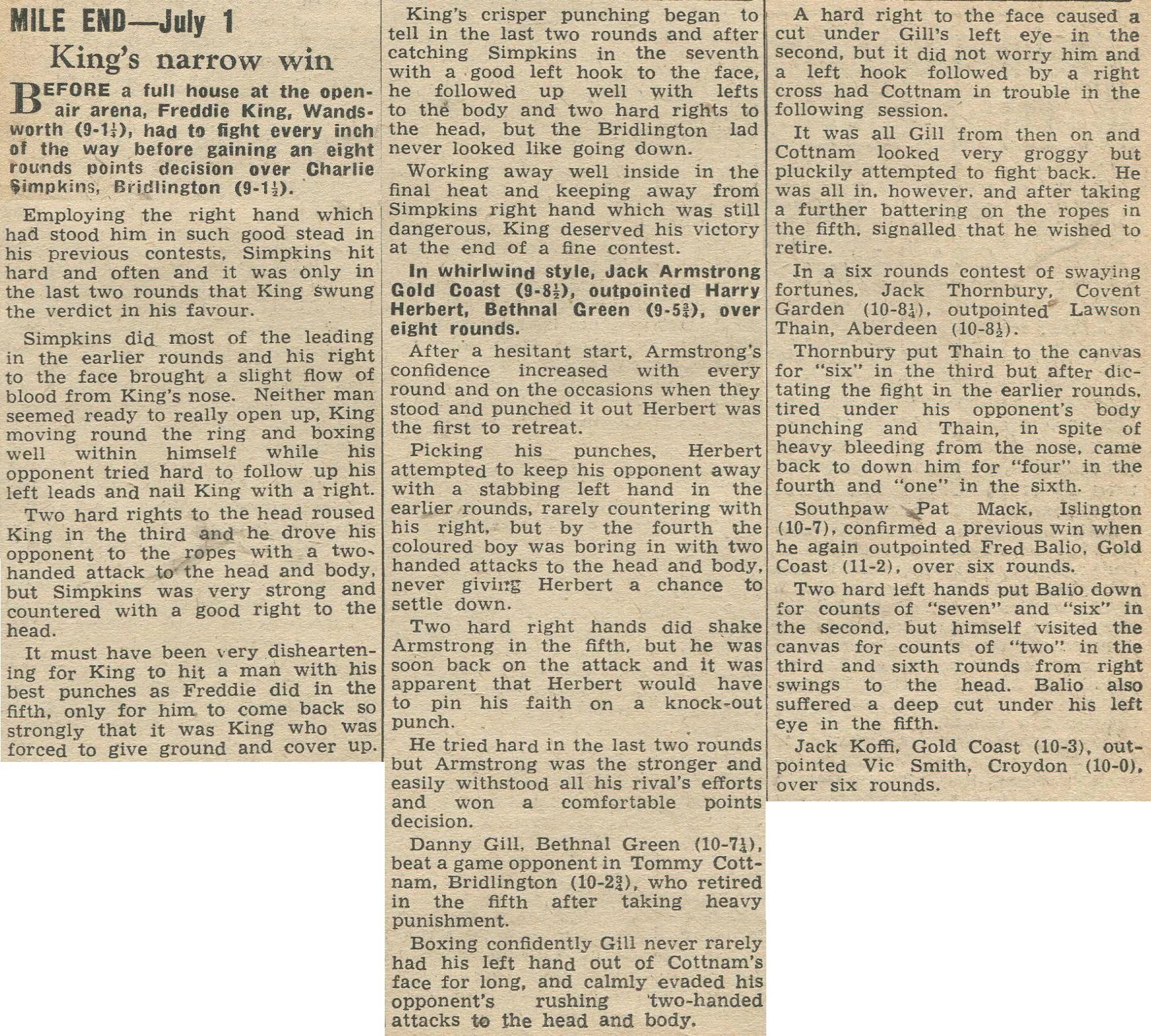
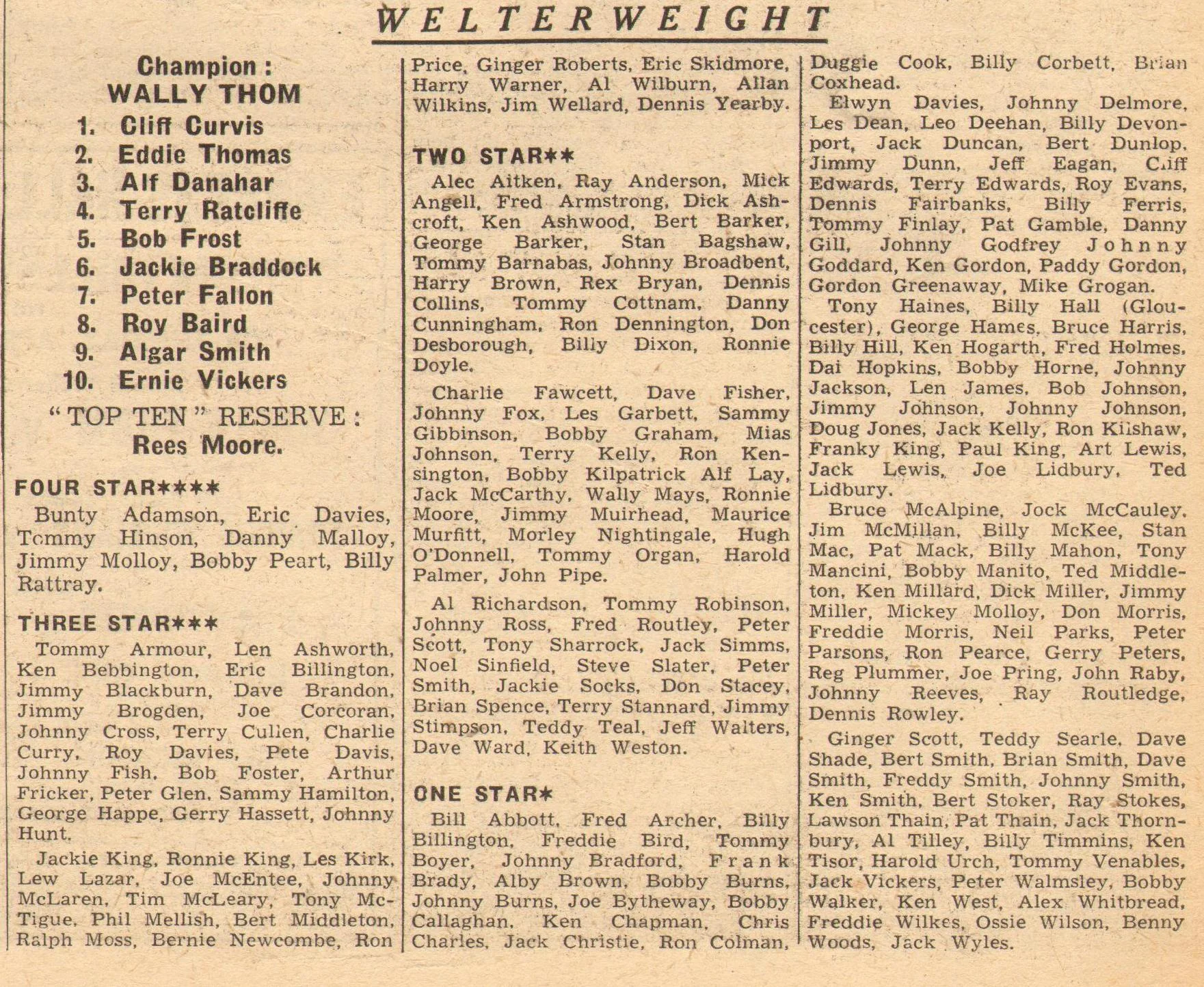
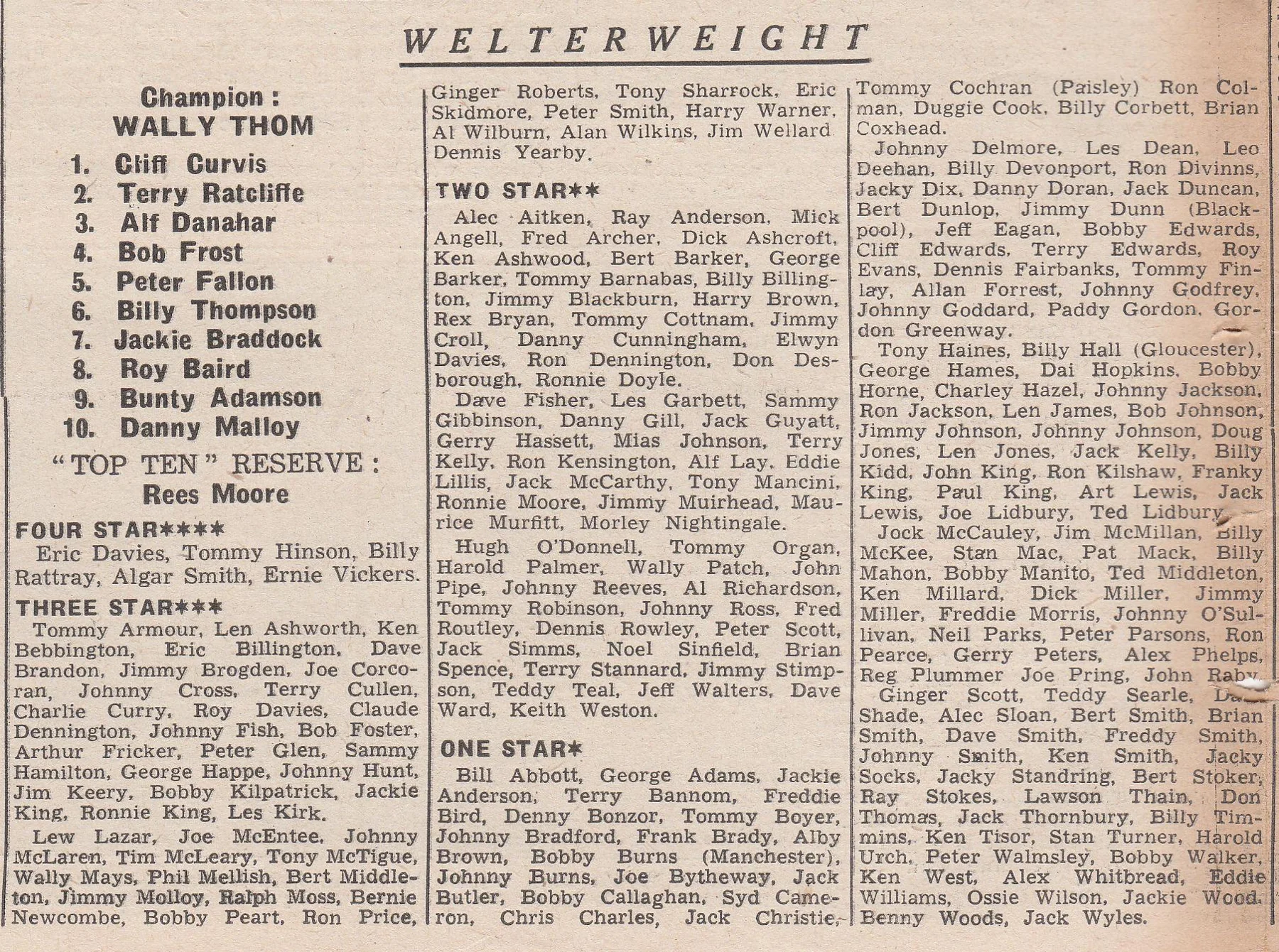
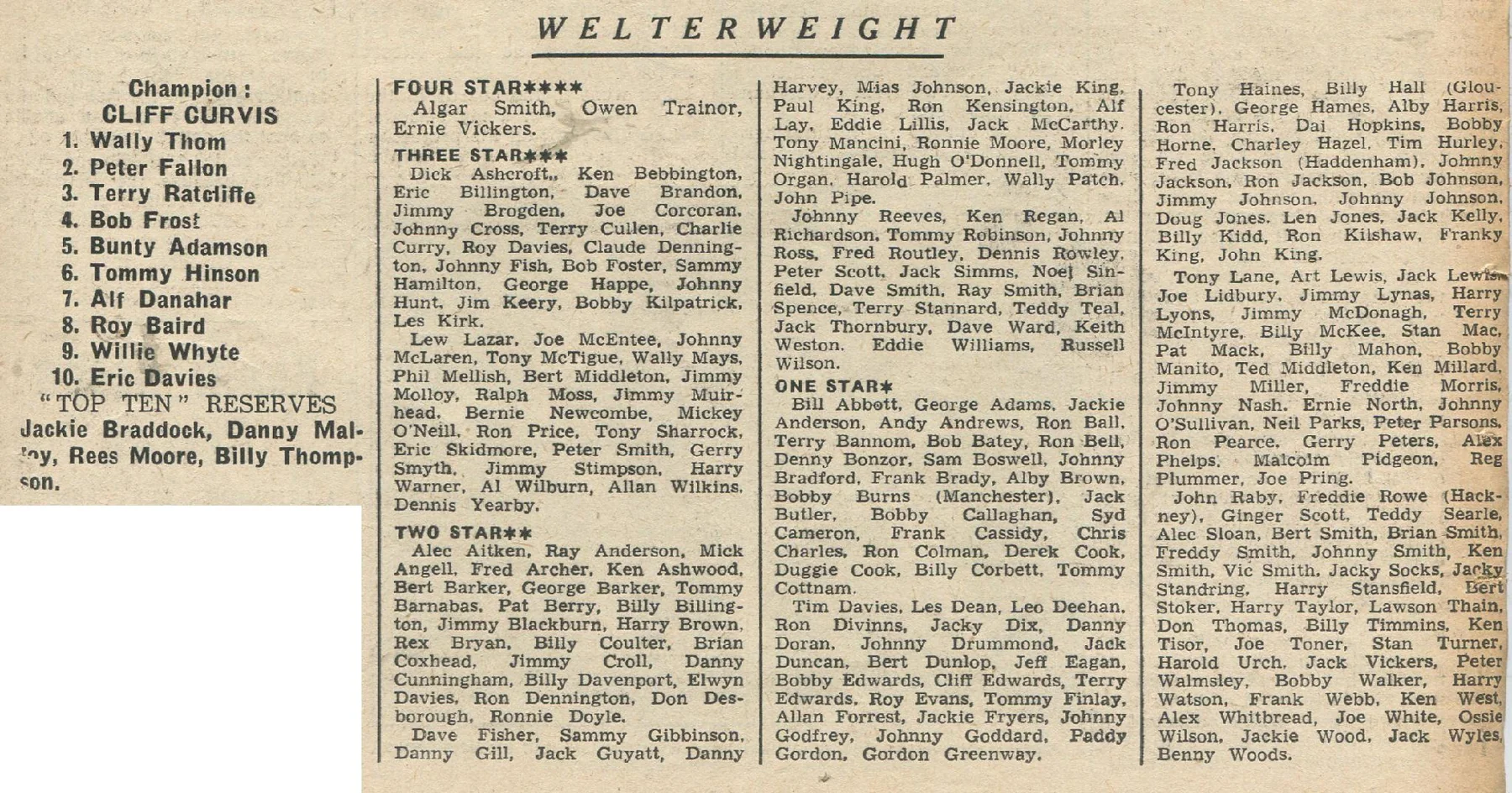
A May 2022 Press and Journal report about the Thain family included a photograph of Lawson and described a connection to Henry Cooper at Deepcut. This retrospective report supports the existence of a longstanding family account; it is not a contemporary Army personnel or coaching record.
A separate family-held clipping, under the column heading “Mitchell’s Diary” and the headline “Man who trained Cooper turns 70”, gives a fuller early-life account. It reports that Lawson began boxing in 1946 at Tommy Begg’s Shiprow club, and links him to Cooper. Donna-Dora confirms that this feature appeared in The Press and Journal in July 2004, marking Lawson’s seventieth birthday. Its photograph recalls a separate sixty-fifth-birthday celebration in 1999. The exact July 2004 issue date has not been independently checked.
The report included a photograph of Lawson during his boxing career and identified him as a former professional boxer.
The Deepcut connection is therefore supported by retrospective newspaper material and by Donna-Dora’s recollections. Neither source establishes the precise sequence of Lawson’s Army service relative to his 1952 professional contests; that sequence remains open pending service or contemporary club records.
It is a brief statement, but one that deserves attention.
The reference connects an accomplished Aberdeen amateur and former professional with one of the most important developmental periods in the career of Britain’s future heavyweight champion.
The wider military setting is independently documented.
Cooper’s own recollections confirm the Royal Army Ordnance Corps boxing environment, Captain Eastlake’s involvement and the considerable emphasis placed upon training and competition.
Donna-Dora’s testimony identifies both Cooper brothers as men with whom Lawson trained and sparred. It does not establish that he was their principal coach or that he originated any particular technique associated with Henry’s later career.
What remains unclear is whether Lawson held a formal appointment as coach, the duration of his work with the brothers, and the precise chronology of his service.
Nor does the material presently available establish that Thain was Cooper’s principal trainer.
Those distinctions matter.
Henry Cooper was already an accomplished international amateur when he entered the Army. He did not arrive at Deepcut as an unknown beginner.
Nevertheless, the account identifying Thain as someone who trained Cooper is an important part of the Aberdeen boxer’s surviving history.
It suggests that his knowledge of boxing was put to use beyond his own competitive appearances.
And it raises a question familiar to anyone who studies the sport’s past: how many capable fighters helped others develop without receiving the recognition later afforded to the champions themselves?
Henry Cooper Before the Professional Ranks
Boxing historian Miles Templeton has examined Henry Cooper’s amateur career in detail for Boxing News.
His research provides valuable context for understanding the significance of Cooper’s Army years.
By the time Cooper entered National Service, he had already established himself as one of Britain’s leading amateur heavyweights.
His achievements included success in domestic championship boxing and selection for the 1952 Helsinki Olympics.
The Army therefore inherited a talented and experienced young fighter.
What it offered was an opportunity to continue developing alongside other accomplished boxers within a highly competitive environment.
Cooper’s subsequent Army achievements demonstrate the strength of that period.
He won Army championship honours and the Imperial Services Boxing Association title, while continuing to compete against leading amateurs.
The battalion’s wider boxing circle included his brother George and the Welsh heavyweight Joe Erskine, another fighter who would later become a British professional champion.
In June 1983, SOLDIER magazine published an interview in which Cooper looked back upon his military service.
He recalled the intensity of the boxing programme and estimated that he and his brother had boxed between sixty and seventy times during their two years in uniform.
It was a remarkable amount of competitive experience.
Cooper also remembered the seriousness with which the men trained, describing a programme that approached professional standards despite their continued amateur status.
The importance of those years is clear.
They allowed Cooper to accumulate experience, develop physically and continue competing before entering the professional ranks.
For Lawson Thain, the reported training connection places him within that wider story.
It does not establish responsibility for Cooper’s championship victories, but it identifies him as someone whose boxing experience was reportedly shared with a future British heavyweight champion.
That is a contribution worth investigating and remembering on its own terms.
The Strength of Army Boxing
The competitive standard of Army boxing during this period can be seen in surviving championship programmes.
The Royal Albert Hall’s historical records preserve details of the Army Boxing Association Individual Finals held on 27 March 1953.
The programme includes Henry and George Cooper, Joe Erskine and other accomplished service boxers.
Such events were important fixtures in the amateur calendar.
Military boxing brought together men from different backgrounds and regions, often placing experienced amateurs alongside fighters who would later become leading professionals.
For some, the Army represented the most intensive period of training they had experienced.
For others, it was an opportunity to maintain their competitive careers while fulfilling their National Service obligations.
The Royal Army Ordnance Corps was particularly successful in gathering boxing talent.
Captain Eastlake’s programme provided a structure in which young fighters could train regularly and compete at a high level.
Although the surviving championship records do not establish Thain’s specific coaching duties, they help us understand the environment described in the Press and Journal account.
It was a place where boxing knowledge mattered.
Experienced fighters had opportunities to work alongside younger men, and the distinction between competitor, training partner and informal instructor could be less clearly defined than in a modern professional training camp.
The precise form of Thain’s contribution remains open to clarification.
But the setting itself was real, well documented and central to Cooper’s development as a boxer.
From Deepcut to Wembley
Henry Cooper turned professional in 1954.
Over the following years, he became one of the most popular figures in British sport.
He won British, Commonwealth and European heavyweight honours, building a reputation for courage, determination and a devastating left hook.
That punch became famous as ’Enry’s ’Ammer.
On 18 June 1963, Cooper met the young Cassius Clay at Wembley Stadium.
Near the end of the fourth round, Cooper landed his celebrated left hook and sent Clay to the canvas.
Although Cooper ultimately lost the contest, the knockdown became one of the defining moments of his career.
Clay would later become Muhammad Ali and one of the most recognisable figures in sporting history.
Cooper’s own standing in British boxing was secure long before his eventual knighthood.
He remained admired not simply for his victories, but for the character and sportsmanship with which he conducted himself.
Looking back from Wembley, it is tempting to view his earlier experiences as steps along an inevitable road to greatness.
But the young Henry Cooper who trained at Deepcut could not have known what lay ahead.
He was one talented boxer among many, preparing for competitions and learning from the people around him.
The reported involvement of Lawson Thain belongs to that earlier world, before the championship belts, the great Wembley occasion and the public recognition.
It is a reminder that the history of a celebrated fighter is also connected to the less familiar lives of those who shared his training environment.
The Importance of Getting the Record Right
Lawson Thain’s story illustrates a wider problem in boxing history.
The sport has always generated an enormous volume of information: fight programmes, newspaper reports, amateur championship results, licence applications and personal recollections.
But that information has not always survived in an organised form.
Some records remain in private collections. Others are held in newspaper archives or specialist boxing libraries. Many have never been digitised.
As a result, the histories of lesser-known fighters can become reduced to incomplete statistics.
Thain provides a clear example.
Without the additional research undertaken by Miles Templeton and Richard Ireland, his professional career might continue to be described as consisting of only three or four fights.
The identification of the Syd Cameron contest changes that account.
It restores his professional debut and establishes that he began his paid career with three successive victories.
The difference may appear small, but historical accuracy is built upon precisely such details.
A missing contest is still a missing part of a man’s life.
And when the surviving record is already limited, each recovered piece becomes more important.
The same principle applies to Thain’s reported connection with Cooper.
It is tempting to build a dramatic story around the suggestion that an overlooked Aberdeen boxer helped create a British heavyweight champion.
But the evidence does not require such exaggeration.
Thain had achievements of his own.
He was a successful amateur, a professional boxer and, according to a published family-related account, someone who trained Henry Cooper during his Army years.
That is a worthwhile history without adding claims the surviving records cannot yet support.
Remembering Lawson “Joe” Thain
The Boy Who Found a Place for His Grief
There was a loss at the beginning of Lawson’s story that never entirely left him. His daughter Donna-Dora recalls that he was only days away from his fourteenth birthday when his mother died. Boxing, she says, became his lifeline. The anger and hurt that a boy could scarcely put into words found an outlet against the punchbag.
It would be easy to read a fighter’s toughness as something born entirely in the gym. In Lawson’s case, his daughter remembers something more complicated: a man with a hard reputation who continued to grieve for his mother throughout his life. That private sorrow belongs alongside the public record of his boxing achievements.
A Career Interrupted by Ordinary Responsibilities
The five professional contests of 1952 mark the limit of Lawson’s presently reconstructed professional record, not the end of his involvement in boxing. Donna-Dora recalls that work and family responsibilities shaped his later life, but the family dates do not explain why the documented professional contests ended in 1952. Lawson and his future wife were together for seven years before marrying in 1961, and their eldest daughter Margaret was born in July 1962. The reason his recorded professional career ended remains unestablished.
He never stopped being a boxing man. His monthly copy of Boxing News remained a fixture. He followed the sport, admired Henry Cooper and carried the habits of training into the years long after his own professional contests had ended.
The Sonny Liston Stare and the Kitchen Gym
Lawson had his own verdict on boxing’s great nights: to him, Ali against Sonny Liston was the greatest fight of all time. Donna-Dora cannot recall whether he meant the first fight in 1964 or the rematch in 1965. At home he also found a way of bringing Liston into family life. When his wife gave the children a stern look, he would tell them she was wearing her “Sonny Liston stare”. They knew at once they were in trouble.
Even in later life he kept training. The kitchen became his gym, with a towel hung over a pulley serving as an improvised opponent. Porridge and prunes were part of his routine, and he walked everywhere for as long as he was able. The boxer remained present in these small domestic rituals.
Donna-Dora remembers that dementia eventually changed his life. Her mother believed his years of taking punches might have contributed, although that remains a family concern rather than a medically established conclusion about Lawson’s individual illness.
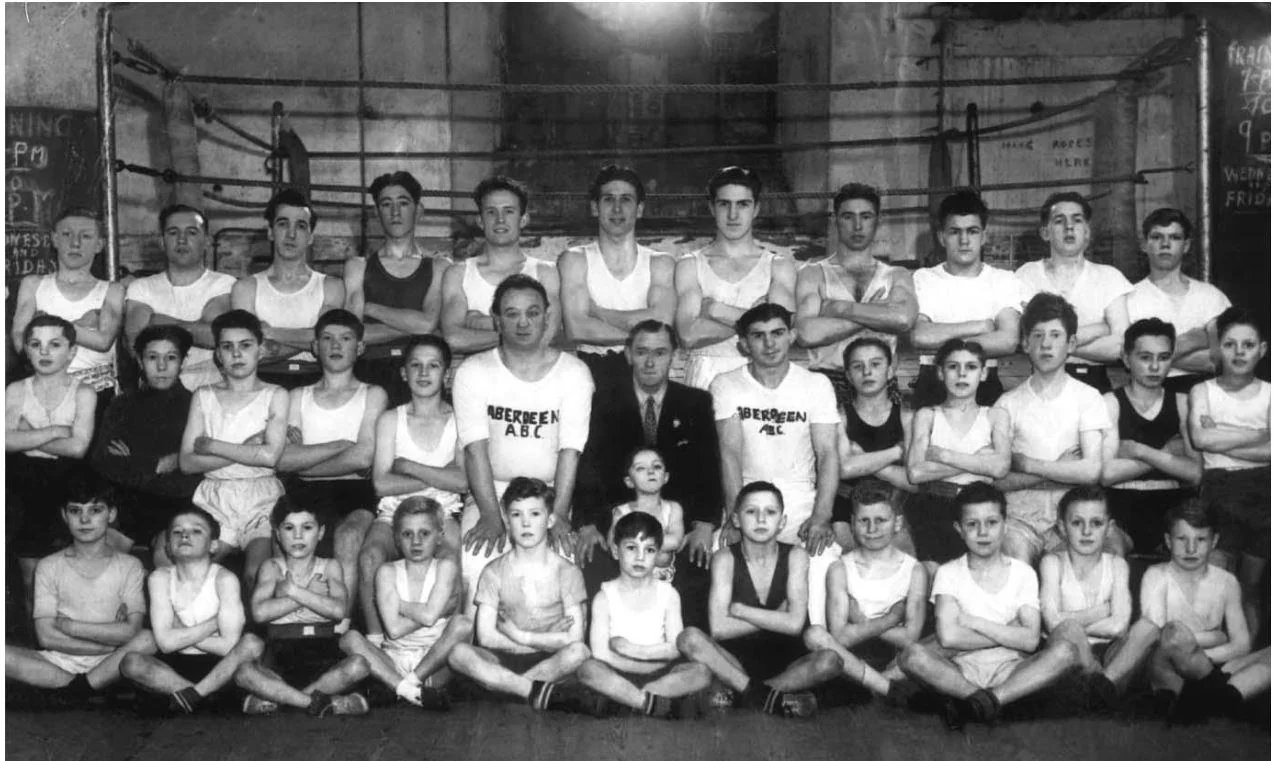
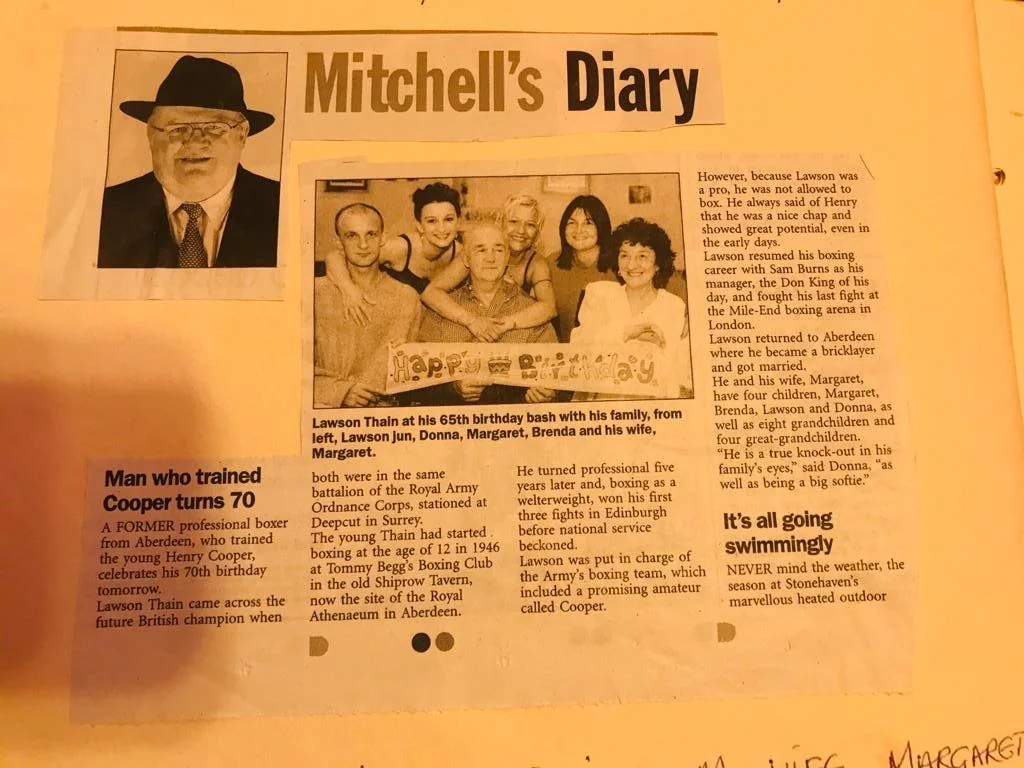
The cutting names Lawson’s wife Margaret, children Margaret, Brenda, Lawson and Donna-Dora, and eight grandchildren and four great-grandchildren at the time. It says he returned to Aberdeen, became a bricklayer and married. The family described him as a tough character and a gentle man.
Boxing history tends to remember its champions.
Their victories are recorded, their photographs preserved and their careers revisited whenever a significant anniversary approaches.
The lives of those who competed outside the championship spotlight are often harder to recover.
Lawson Gordon Thain was one of those men.
His amateur championship honours establish that he was a capable boxer long before he entered the professional ranks.
The five contests reconstructed by Miles Templeton and Richard Ireland give us a clearer understanding of his brief professional career.
And the Press and Journal account provides a reported connection to Henry Cooper, placing Thain within the wider history of British military boxing.
Aberdeen Boxing Club’s own honours register confirms three junior district titles; contemporary boxing reports collected by Miles Templeton and Richard Ireland support the five reconstructed professional contests. Retrospective press material and Donna-Dora’s direct family testimony preserve the Cooper connection, with its precise Army chronology still uncertain.
Donna-Dora has confirmed that Lawson trained and sparred with both Cooper brothers. We have not independently established his formal coaching title, the dates of the sessions or responsibility for specific techniques.
His family has already helped us understand far more.
But Lawson Thain was not simply a name associated with a famous heavyweight. He was a boxer with a history of his own.
Five fights in the professional record. A much larger life beyond it.
That is the story worth remembering.
Sources and acknowledgements
Miles Templeton and Richard Ireland — boxing historians; professional record and contemporary newspaper evidence.
https://boxingnewsonline.net/features/heavyweight-legend-henry-cooper-as-an-amateur/
Aberdeen Boxing Club — Historical Championship Honours
Records Lawson Thain’s North East District and Midland District junior championship achievements.
https://boxingclubaberdeen.com/wp-content/uploads/2025/10/achievements2025.pdf
Ministry of Defence — Boxing Legend Cooper’s Life in the Army
Published 3 May 2011. Cooper’s recollections of National Service, Captain Eastlake, the RAOC and Army boxing.
https://www.gov.uk/government/news/boxing-legend-coopers-life-in-the-army
Press and Journal — Lawson Thain family report
May 2022. Photograph and published account that Thain trained Cooper while stationed at Deepcut.
SOLDIER magazine — June 1983
Interview with Cooper about Army boxing.
https://soldier.army.mod.uk/media/qv4eltkd/june-13-26-1983-vol-39-no12.pdf
Royal Albert Hall Archive — Army Boxing Association Individual Finals
27 March 1953 championship programme.
https://catalogue.royalalberthall.com/
.
← Back to MBB Ringside